
Why Vocational Training Matters in Uganda
August 25, 2026 2026-08-25 13:36Why Vocational Training Matters in Uganda
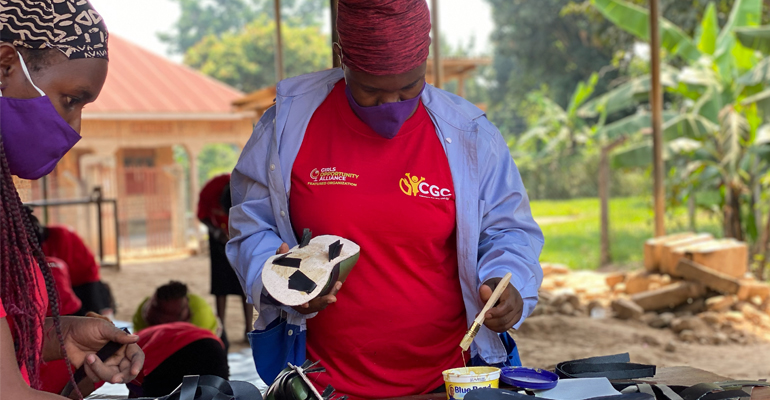
Across Uganda, thousands of young people are leaving school every year without the practical skills needed to secure employment or build something of their own. Vocational training is how we close that gap.
Walk through any trading centre in Uganda and you will meet them: young men and women who finished primary school, or even secondary school, and now have nowhere clear to go. They are not short on ambition. They are short on a bridge — a way to turn effort and intelligence into a skill someone will pay for. Traditional academic education, for all its value, was never designed to build that bridge on its own. It teaches theory. It rarely teaches a trade. And in an economy where formal jobs are scarce and self-employment is often the only realistic path forward, that gap between what young people know and what the market needs has become one of the defining challenges facing Uganda’s youth.
This is where vocational training earns its place — not as a fallback for learners who “didn’t make it” academically, but as a serious, respected pathway in its own right. Vocational training is not only about teaching trades like carpentry, tailoring, catering or mechanics. It is about dignity. It is about self-reliance. It is about handing a young person a set of hands that can build, repair, cook, sew or grow something real, and the confidence that comes from knowing that skill cannot be taken away.
Bridging Theory and Practice
What sets vocational training apart is its insistence on practice over abstraction. A learner does not simply read about welding a joint or preparing a batch of juice for sale — they do it, repeatedly, under supervision, until it becomes second nature. This hands-on approach mirrors exactly what employers and customers actually expect: someone who can do the job on day one, not someone who needs months of on-the-job retraining before they are useful. For a country where the informal economy absorbs the overwhelming majority of young workers, that immediate, practical competence is not a bonus. It is the whole point.
HVLC’s Approach: Skills That Match the Market
At Hayes Vocational Learning Centre (HVLC), we are committed to closing this gap deliberately and thoughtfully. Our programmes were not designed in a vacuum — each one, from Carpentry, Welding & Fabrication to Fashion Design & Garment Making, from Childcare & Early Childhood Development to ICT & Mobile Phone Repair, was shaped around what Uganda’s economy genuinely needs and where genuine opportunity exists. We do not simply teach a trade and send learners on their way. We pair every technical skill with entrepreneurship training, so graduates leave not just employable, but equipped to build a business, employ others, and reinvest in their communities.
This dual focus; employability and entrepreneurship — matters because it gives graduates options. Some will walk straight into jobs with construction firms, catering businesses, tailoring houses or ICT repair shops. Others will start their own small enterprise, turning a single skill into a livelihood that supports an entire household. Either path represents the same underlying transformation: a young person moving from uncertainty to capability.
A Pathway for the Most Vulnerable
Vocational training matters most, perhaps, for those the traditional system too often leaves behind. Young women who left school early. Teenage mothers rebuilding their futures while raising a child. Youth from families who could never afford years of academic study. For these groups, a focused, practical training programme measured in months rather than years is not just convenient; it can be the single intervention that changes the trajectory of a life. At HVLC, our admissions approach is built with this reality in mind, ensuring that the learners who need this pathway most are able to access it.
Skills as Seeds of Transformation
Ultimately, vocational training matters because it changes lives; not abstractly, but concretely, one certificate, one first client, one first paycheck at a time. It empowers vulnerable groups, especially young women, to build sustainable futures on their own terms. It strengthens families, because a young person with an income can support siblings, parents and eventually their own children. And it strengthens communities and drives economic growth, because every trained carpenter, caterer, tailor or technician is also a taxpayer, an employer-in-waiting, and a role model for the next young person watching from the sidelines, wondering if there is a way out.
At HVLC, we believe that every skill taught is a seed of transformation. Our task is simply to plant as many of those seeds as we can, and to make sure they land in soil ready to grow.